Toya Algarin sees grandmothers as a way through Philadelphia’s literacy crisis
Walk into one of Toya “Gigi” Algarin's sessions, and you'll hear the quiet click of crochet hooks on desks as stories are being read aloud.
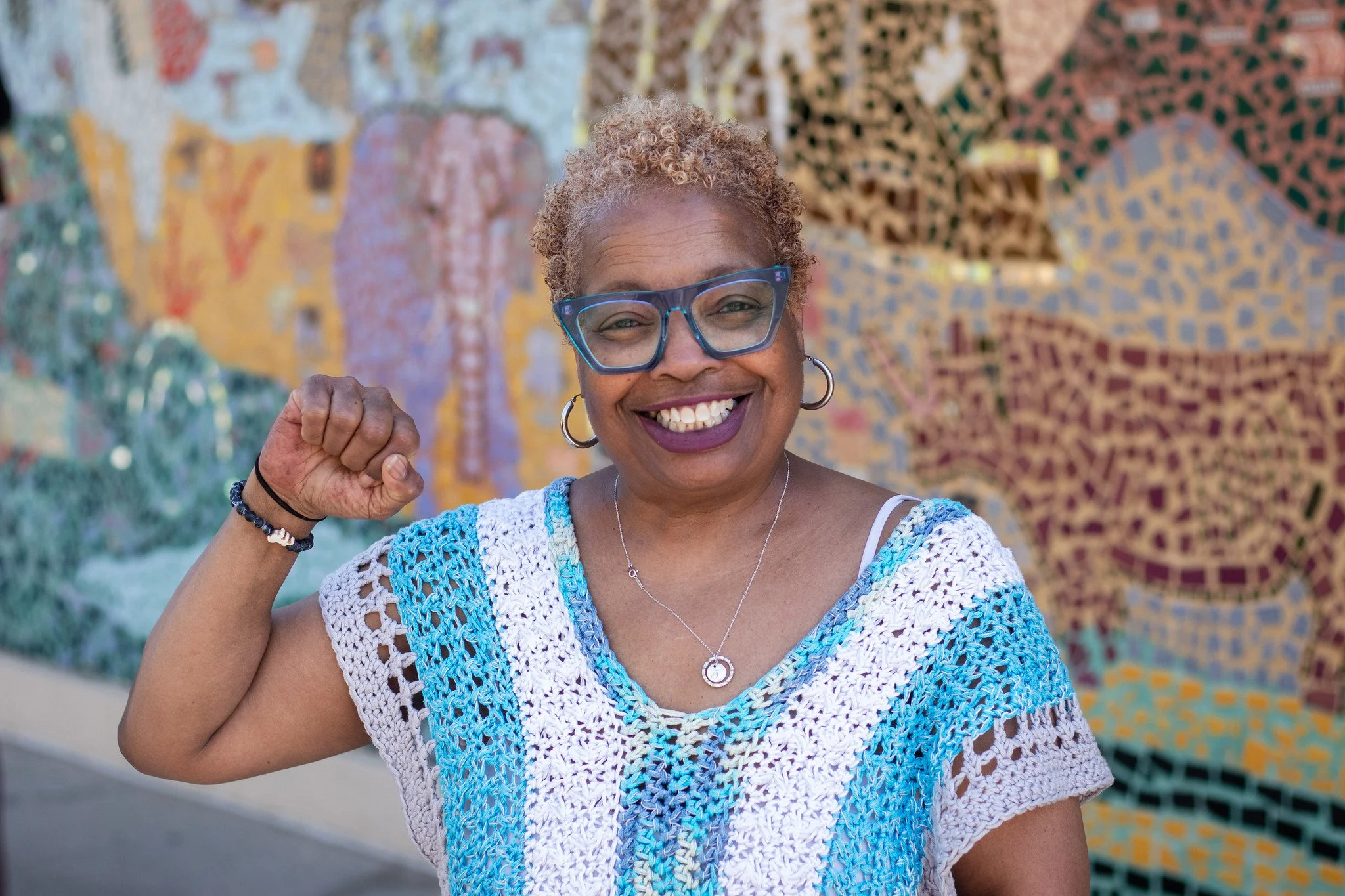
Toya is the founder of Grandmas4Literacy, an organization rewriting who gets to lead early literacy work in Philadelphia. Her idea is simple and radical: the people best positioned to teach children to read may already be in their homes. We sat down with Toya to talk about the power of a grandmother’s love, Philly’s literacy crisis, and why she believes liberation has always started with a book.
Q: Why is literacy a cause you dedicate your life to?
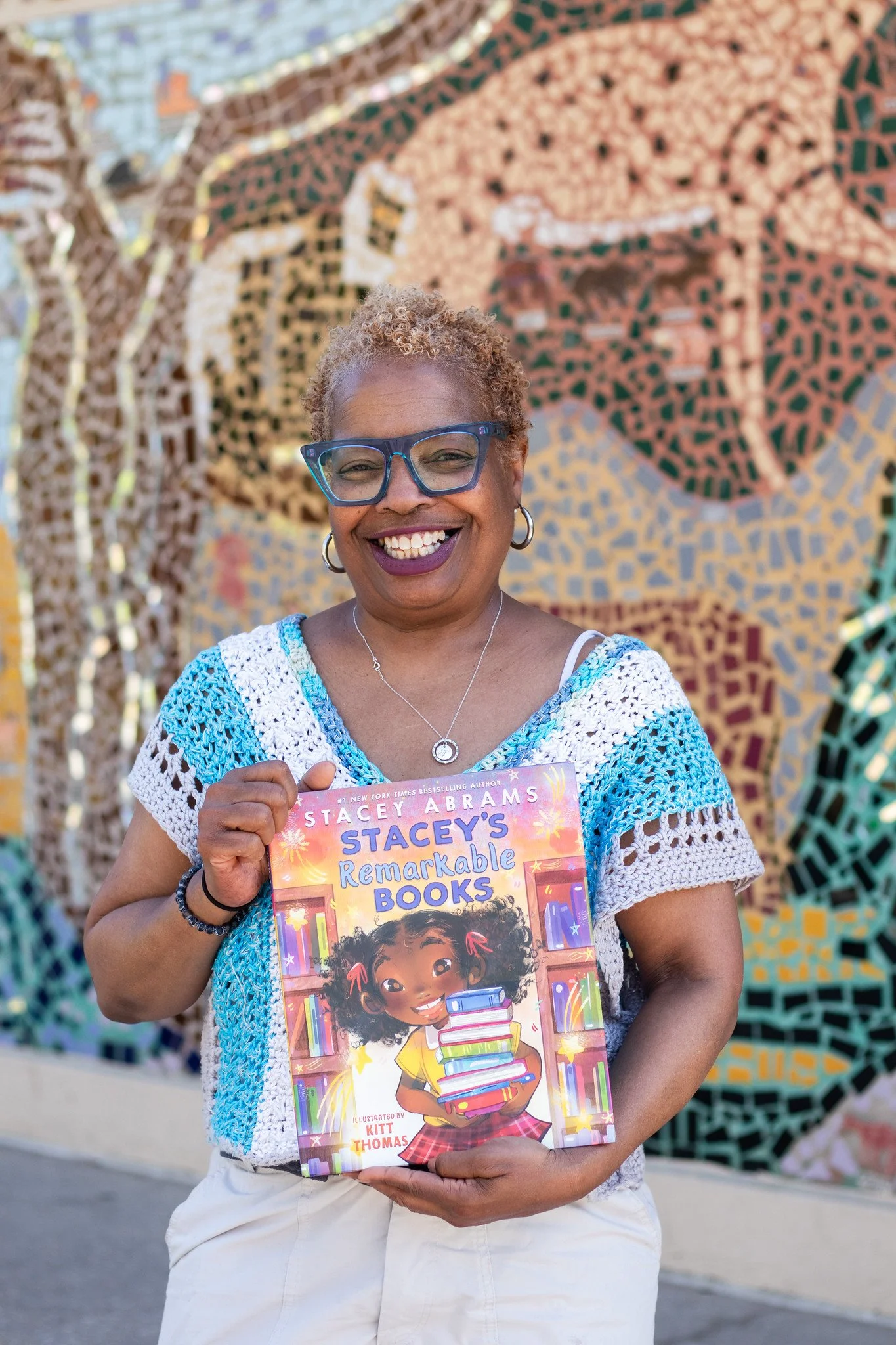
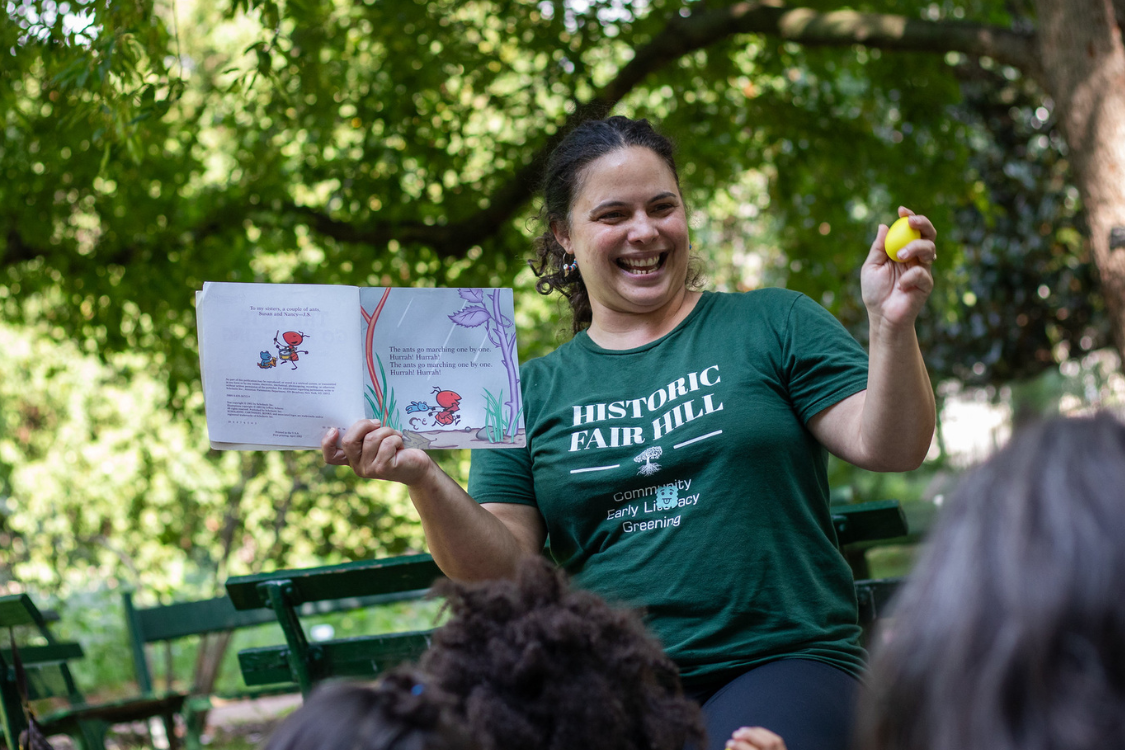
Toya “Gigi” Algarin holds up Stacey’s Remarkable Books, a story she shares with her students.
When I tell this story, I automatically go back to 1929, that's when my mother was born.
My mother never graduated from high school, but she taught me that education was the most important thing in the world. And she was a beast. She became a judge of elections without a diploma. That was just who she was.I had the value of education instilled in me early. I sent my kids to some of the best schools I could find. They graduated lacking some of the basics.
That's what gets me. Because my mother was raising my children while I was building my career, and she was amazing. My kids are great human beings because of her. But imagine if she'd had the resources to teach them how to read. Things might have been different. So now I want to supply other grandmothers with those resources. Because grandmothers change lives.
“If you can read about it, you can be about it.”
— Toya "Gigi" Algarin, Grandmothers for Literacy
Q: Why grandmothers? What do they bring that other interventions miss?
Culturally, grandmothers are already raising children. Especially in Black and Brown communities, but really across many different cultures. In Philadelphia, about 30% of grandparents are parents or caregivers. That's a lot of children. And that number doesn't even count all the grandparents doing it unofficially. So we're already there. At home, at school, in the lives of our children.
30% of Philadelphia’s grandparents are caretakers for their grandchildren. That’s more than 14,000 grandparents raising young readers. (Source: WHYY)
But who's investing in the grandmothers? Who's giving her the tools, the training, the resources? Nobody. And let’s be real, not all teachers know how to deal with our kids. That classroom management piece? Some teachers don't have it. But grandmas? We are already culturally relevant. We know how to teach our children because we do it naturally.
Grandmothers are natural comforters. I'm at school every morning, meeting kids at the door, buying apples, buying lunch. They know me. So when they start acting up, and I walk through those halls, first they stop and say hi to Gigi. It's just different. That presence, that relationship. It’s the whole thing.
“Who's investing in grandmothers? We ain't done yet. We’ve still got something to give and stuff to say!”
— Toya "Gigi" Algarin
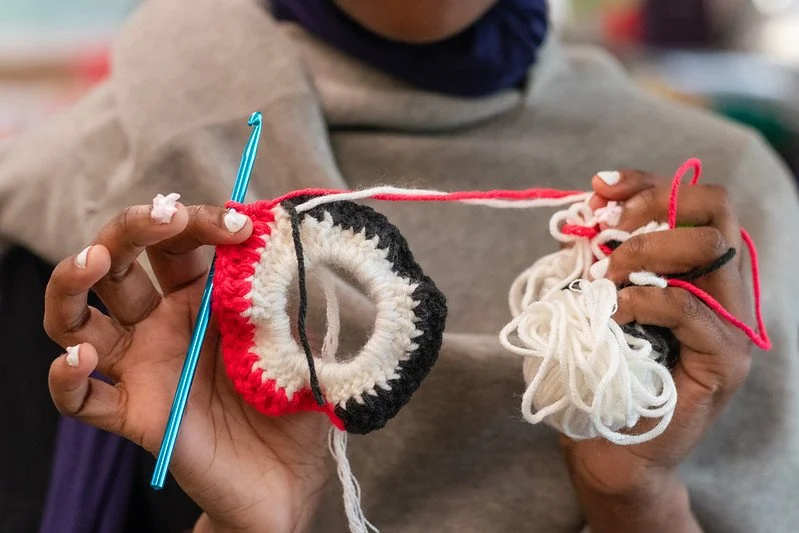
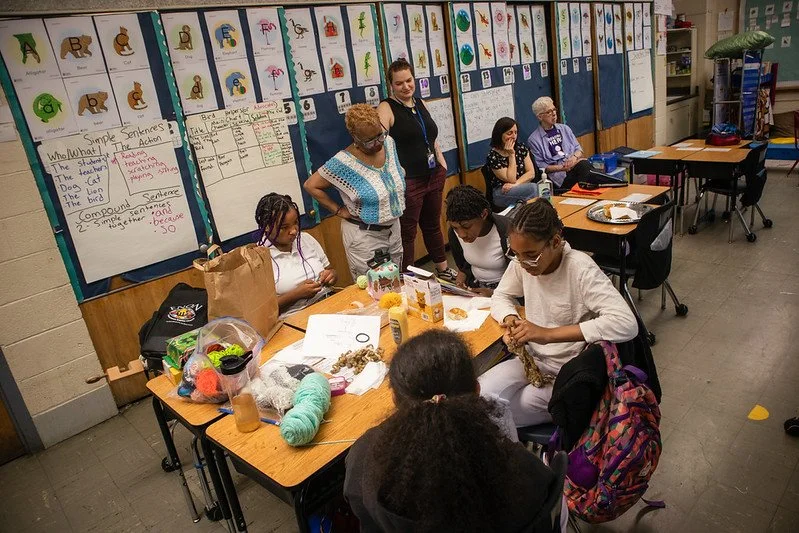
Q: What happens in your classroom? How do crochet and literacy work together?
My son was hit by a car on the first day of school. He was taking three buses to get there, and he was in a coma for two weeks. Through all that trauma, I started to crochet. It steadied me. And I figured I could take what crochet did for me and bring it into the classroom because so many of our kids are also dealing with trauma. So I started forming crochet clubs in schools. And from there, I started infusing literacy into those clubs.
We come in, we do some mindfulness to settle down, and then we get into crocheting. Designing patterns, being creative, being artsy. We do that for about an hour. And then we read. And they don't even realize what's happening because when you crochet, it opens the mind up to focus. It's almost like when you're teaching a child to blend and you have them tap out the letter sounds. It's about rhythm. Crocheting can help get the brain ready to learn.
We recently read a book about a girl who makes friends with someone from another country. We didn’t just read it, we talked through it. Vocabulary. Perspectives. Meaning. Now my kids understand when somebody new comes to their class from somewhere different, how that person might feel alone, how they should be treated. That's not just literacy. That's how they become doctors. How they become lawyers. How they become better human beings.
Q: Why does Philadelphia need to prioritize literacy right now?
Because Black and brown children can't read. Just look at the literacy rates. We might have had some growth, but where were we coming from? Parents cannot wait for the school to do it. They need to get involved and do it themselves. It's called self-determination. That's how we learned to read in the first place—we taught ourselves.
I follow Dr. Howard Fuller, and he said something that stopped me cold: “Only an idiot would assume that what happens before a child comes to school doesn't affect how they learn.” If that child is hungry, he ain't going to learn. He couldn’t care less about literacy. If there's trauma at home, if there's violence at home, he or she cannot learn.
You can’t just walk into a classroom and think you’re educating a child in isolation. No. You need to take a holistic approach. Because understanding everything that’s happening in that child’s life, that's all part of this work.
Q: Any final words of wisdom?
The Grandmas4Literacy logo has a lotus on it. When the sun comes out, the lotus is born again. That's what I think about when I think about literacy. Being able to read is like being born again. It opens your life up to liberation and freedom.
And it’s the same with grandmas. We ain't done yet. I'm a grandmama of eight. Gigi stands for gorgeous grandma because my kids made me a grandma before I was ready. So I had to be gorgeous. But I’ve still got something to give. We’ve still got something to say.
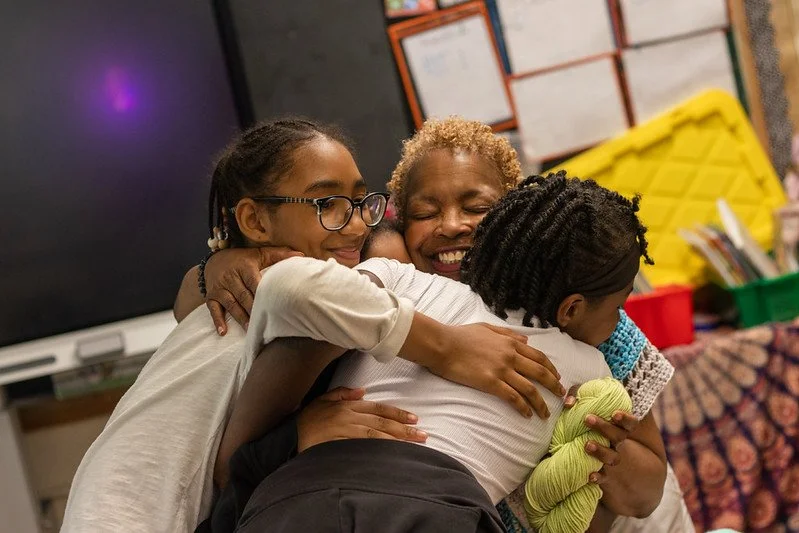
The power of a grandma’s love on full display as Toya and her students share a hug.