What Historic Fair Hill's garden can teach us about growing lifelong readers
Some literacy programs happen at a library table. This one happens in a garden, next to headstones that are a couple hundred years old. Under the shade of a giant tree, children and caregivers gather to sing, read, and discover that stories don't just live in books, they're growing all around them.
Welcome to Wondrous Wednesdays, the summer story time run by Historic Fair Hill, a Read by 4th partner turning their green space into one of the most unexpected literacy classrooms in Philly. We caught up with Martina Barbour, Historic Fair Hill's literacy director, to talk gardens, book joy, and why five minutes of reading can change everything.
Q: For people who don't know Historic Fair Hill, what are we looking at here?
Hi, I'm Martina Barbour. I'm the literacy director with Historic Fair Hill.
Historic Fair Hill is a historic site, arboretum, and community space rolled into one. We care for a Quaker burial ground where some of the country's earliest abolitionists and women's rights leaders are laid to rest. And we use that same ground and our community gardens to connect with our neighbors.
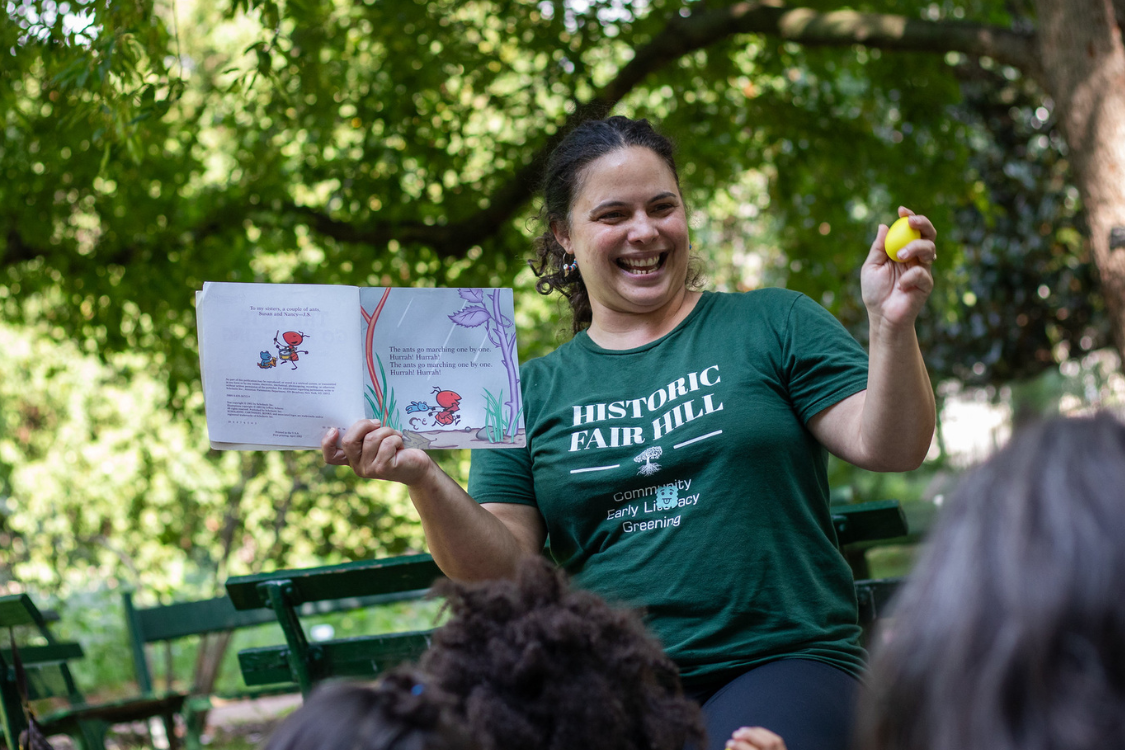
On Wednesday mornings in the summer, we host Wondrous Wednesday, an outdoor family story time where we read books, sing songs, and explore themes from the natural world. Today's theme was rain and the water cycle. We've also covered pollinators, garden creatures, and the night sky.
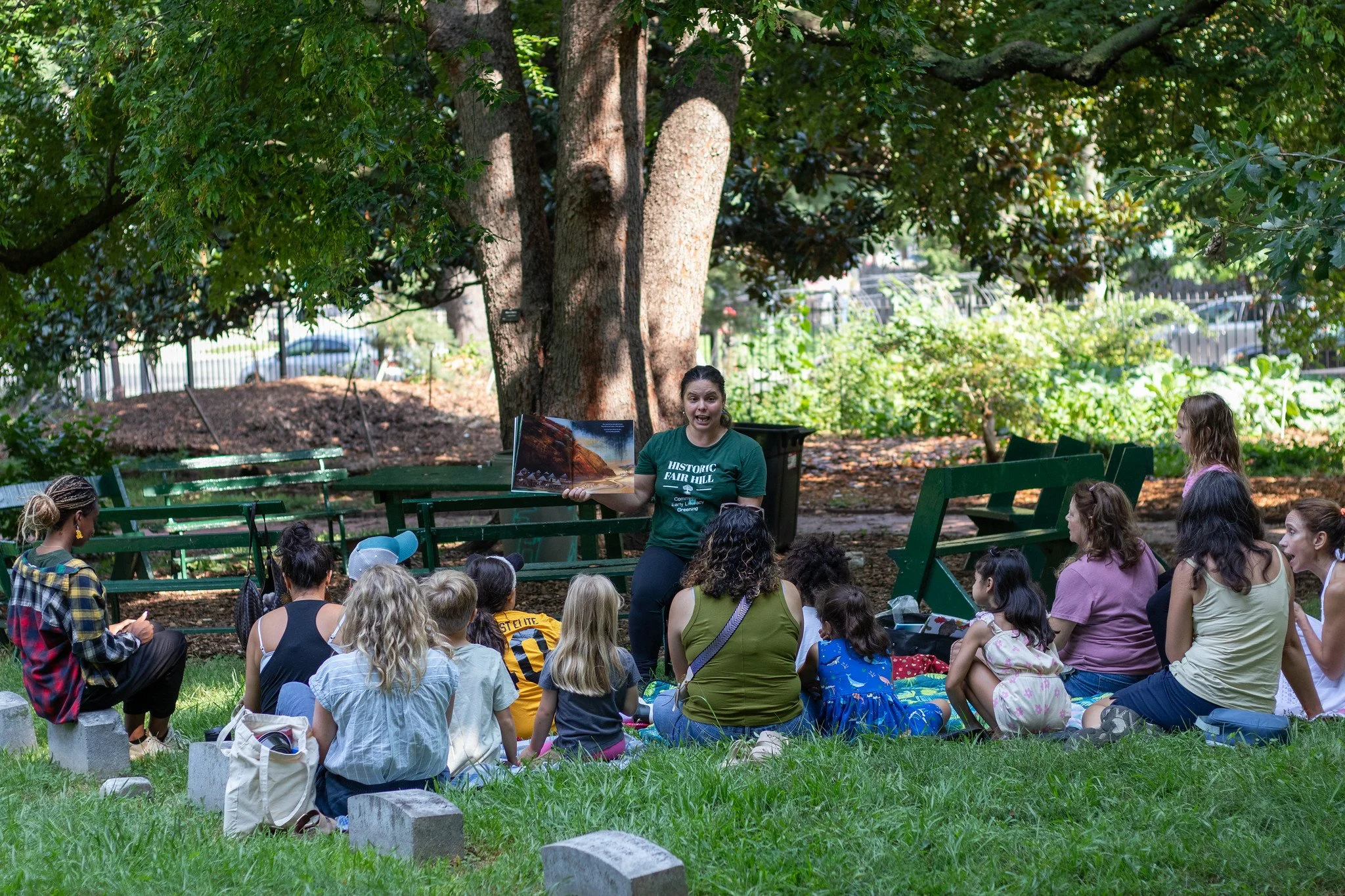
Families gather close, listening as Martina shares a story.
Q: Why put literacy and gardening together? What's the connection?
When we first cleaned up this space in the ‘90s, our nonprofit wanted to go a little deeper. So, we asked the community, "How can we better serve you?" The overwhelming answer was food justice and literacy.
We partnered with four neighborhood schools, creating garden clubs and helping manage and fund their libraries. Eventually we realized something. If we could bring gardens into literacy programming, why couldn't we bring literacy into the garden? There are so many wonderful books about the natural world. Here, children can read about pollinators and then watch one land on a flower.
Q: Why is literacy a cause you care about?
Literacy is connected to everything. At Historic Fair Hill, we talk about how literacy really is justice and equity. The ability to read, but also to be able to comprehend what you're reading, to talk about what you need, to get excited about what you're reading— those are skills that are going to affect everything in life. Your healthcare, your economic status, finding jobs, the way you relate to the world.
But when we’re talking about young folks, literacy is just joyful.
That's my main mission: finding books that engage little ones and help them say, "I want to be a lifelong reader." We have so many young ones who love to read early on, and then as they get older, they're often reading to school curriculum, which is great, but they aren't always finding books that spark curiosity.
That's why finding the right book matters. Books that make kids want to learn more, want to share about themselves. Books that reflect a child's own life matter, and so do books that introduce them to places and experiences they've never seen before. Maybe reading about a whale is the first time a child experiences the ocean. Literacy is a way to open up the world.
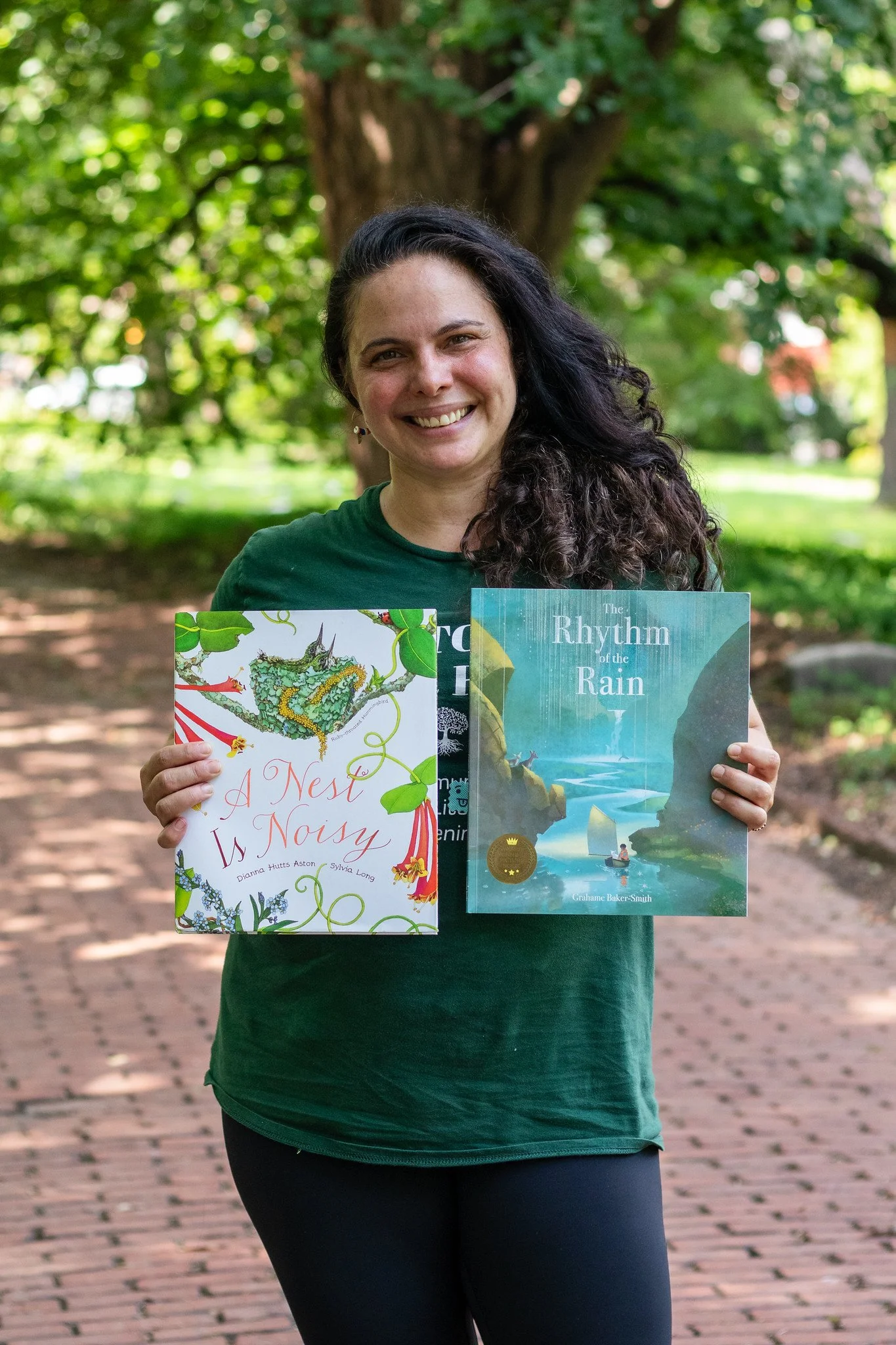
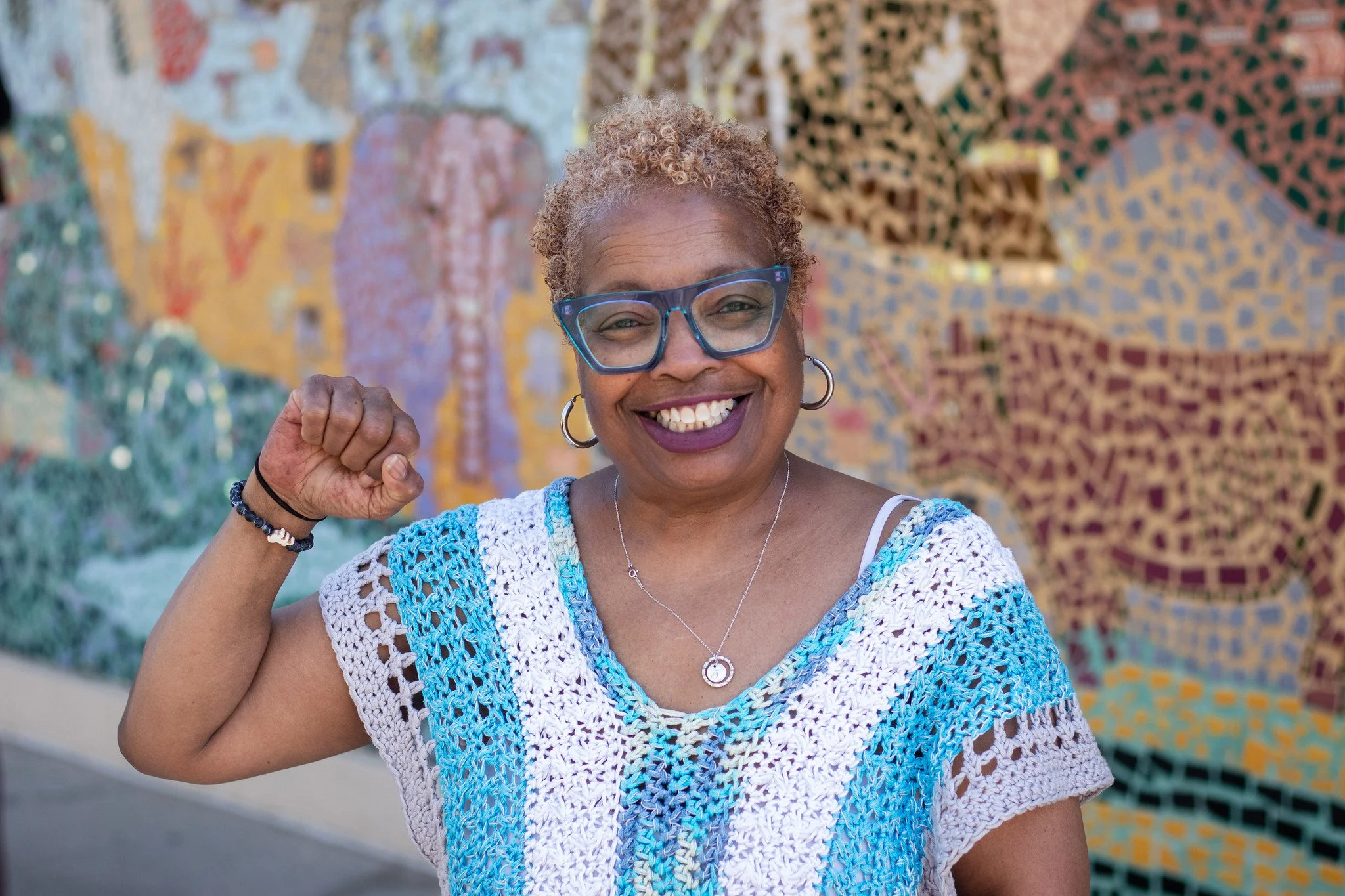
Martina Barbour smiles while holding two books shared during storytime.
Q: Do you have a favorite memory from your work?
I'd have to say the family engagement piece is really meaningful. The programming isn't just for kids, it's for the adults in their lives too. We're really modeling reading and literacy for caregivers and parents, showing them new songs, how to read and ask questions, and how to make it fun.
We also make sure the books themselves reflect our community. Historic Fair Hill serves many bilingual families, so we intentionally choose beautiful bilingual books that welcome everyone into the story.
Literacy work doesn't end with the children. We have to engage the whole family so they can take that love of reading home with them.
Q: If you had one message for Philly families about literacy, what would it be?
I think two things.
One, literacy can absolutely look like sitting down and reading a book together, but it can look like so much more. Songs, talking to your baby and young ones, sharing silly stories, pointing out things you see in the world, it's all part of literacy.
Families often come to me and say, "We don't have the time to always sit and read for super long periods every day. We're busy, we're working, we're at school, we're at camp." But remember that if you read five minutes a day, that is valuable. Reading one book before bedtime, reading a book at bath time, singing a song while you're changing your baby, these are all ways to incorporate literacy so it feels less overwhelming. It all comes back to the joy of it, the fun of it.
And remember, you are your child's first teacher. There's so much that you know that's already inside of you.
Historic Fair Hill's Wondrous Wednesday reminds us of an important truth: children don't just learn to read books. They learn to read the world. Educators call it background knowledge—the experiences children carry with them that help make understanding the story click.
A puddle after a rainstorm. A creeping vine. A buzzing bee. Reading is everywhere, if you take the time to point it out.